
 eSIM Studios
If you're building projects based on Nvidia Jetson modules, don't panic; it's fairly likely that you're working with the newer Orin and Thor modules. If, however, your project is based around the older Xavier or TX2 boards, then we have some bad news: Nvidia has apparently brought forward its EOL timelines for those families of Jetson products due to the RAMpocalypse making LPDDR4 harder to get. That's according to Connect Tech, a Canadian supplier and system integrator for AI systems that says Nvidia has moved these devices to Non-Cancelable, Non-Returnable (NCNR) status due to the change. (Shout out to CNX Software for spotting this.)
The specific devices affected at Connect Tech are the Jetson TX2 NX, the Jetson TX2i (all SKUs), the Jetson AGX Xavier 32GB Industrial variant, and the Jetson Xavier NX in 8GB and 16GB versions, but the supplier actually says that Nvidia has marked all TX2 and Xavier models as NCNR on its side. It also says that final purchase orders for those modules must be in by July 1st, existing purchase orders convert to NCNR on July 15th, and the last time it will ship any orders featuring those products is July 15th next year.
Article continues below You may like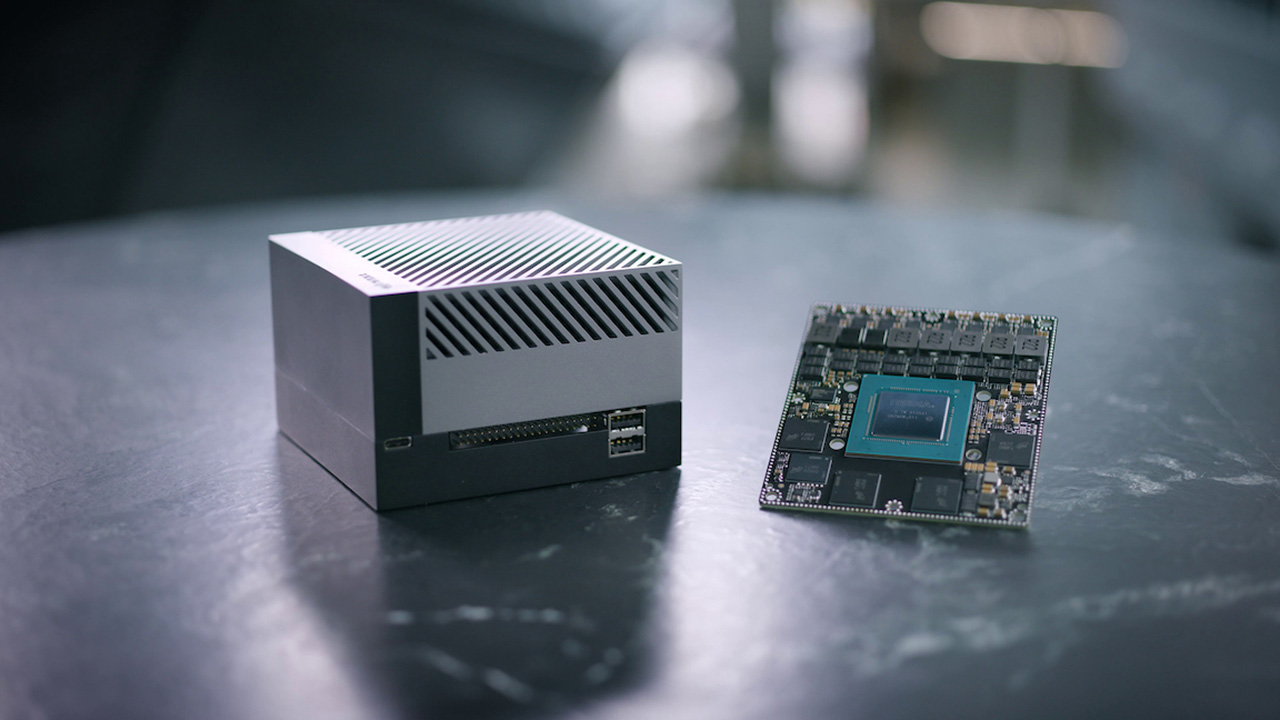
Given that, it's probably time to start thinking about moving to newer hardware if you're working with these parts. Nvidia's Orin NX is close to a drop-in replacement for the older Xavier NX platform as long as you are not relying on more specialized I/O configurations, and the overall form factor and power envelope remain in the same class. Moving from AGX Xavier to AGX Orin is even more straightforward since both use the same 699-pin connector family, although power delivery and thermals still need to be validated.
These are hardly the first casualties of the RAMmageddon, but they do complicate the idea that only DDR5 is under pressure. DDR4 pricing has skyrocketed due to lacking supply since memory manufacturers moved on to DDR5. What is happ ening here is not a simple shortage in the traditional sense but a reallocation of manufacturing capacity. Memory vendors are prioritizing higher-margin parts for AI accelerators, particularly HBM and newer DDR5, and that shift pulls capacity away from legacy nodes that produce LPDDR4.
That leaves older embedded platforms in an awkward position. They depend on memory that is no longer the focus of the industry, yet they still require long lifecycle guarantees that newer consumer products do not. When supply tightens, those platforms are often the first to be pushed into constrained ordering terms, and NCNR status is usually the earliest visible signal.
Seen in that light, this is less about an abrupt discontinuation and more about a market reality finally catching up with aging hardware. The TX2 and Xavier families were already living on borrowed time, and the current memory crunch simply accelerates a transition that was going to happen anyway. For developers and integr ators, the takeaway is that if a design still depends on LPDDR4-based Jetson modules, the window to secure supply is closing, and migration to Orin is no longer just a performance upgrade but a matter of long-term viability.

Follow Tom's Hardware on Google News, or add us as a preferred source, to get our latest news, analysis, & reviews in your feeds.

No comments