
 eSIM Studios
Once every quarter, we’ll be publishing a build here at Tom’s Hardware Premium, intended to showcase the best of our building abilities. After much deliberation, we decided that for this second ‘showstopper’ build, we wanted to push Mini-ITX to its absolute limit, not as buying advice, but as a test, to see whether doing so is remotely viable.
Why are we doing this?I’ve built many PCs in my life, but there’s one challenge I’ve never taken on: an ultra-high-end, custom-cooled ITX system. After looking around the options availabl e, I spotted the NCase M3, and instantly saw a vision for it.
You may like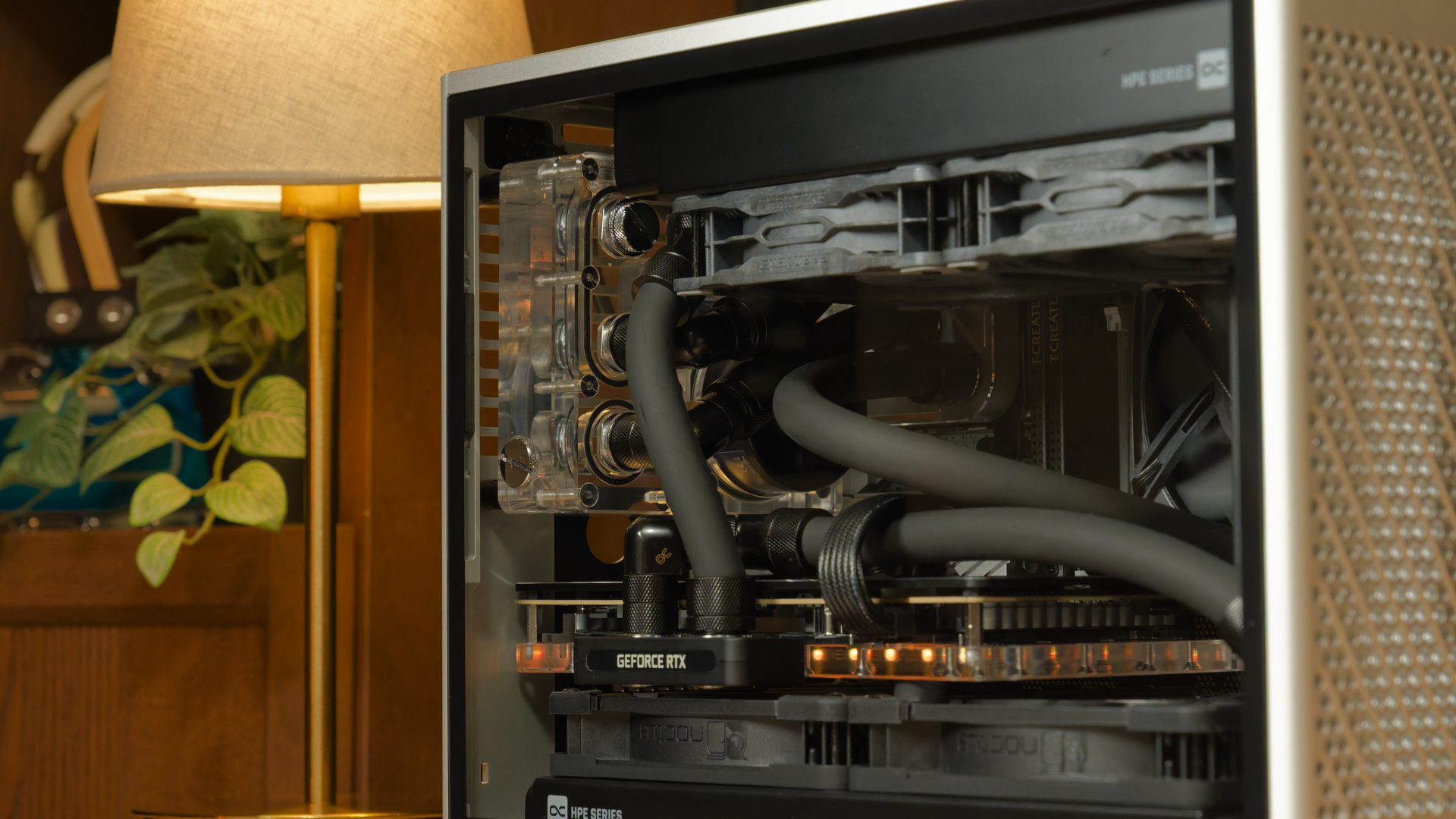
I’ve seen many NCase builds, and although I can attest to it being a fantastic case, there’s one issue I always had with many of the builds, even my own from many years ago: they hide so much of the hardware with side-mounted radiators, fans, & mesh covers.
The demands of the challengeThis led to the demands of my self-imposed challenge:
I was especially adamant about the side window, which had to be implemented. It’s easy to take a small case like this and resort to the mesh panel to keep thermals under control, but that would be a cop-out. Externally mounting hardware would be too – as tempting as it may be to use the space behind the case, so that I could add another fan or radiator, I wanted to keep the challenge confined to the borders of the 19-liter chassis.
Custom cooling this system was no longer optional, but practically mandatory in order to achieve this goal. Vertically mounting a GPU would obstruct the view of all other hardware, and you wouldn’t be able to use the glass side panel, as it would block the air intake. Keeping it mounted in the PCIe slot, you’ll see the other hardware if you use glass. However, using a glass panel when you have an RTX 5090 spitting 600 watts into the case is simply asking for problems – you’d still choke the 5090 with the size restrictions, and you’d be needlessly exposing the motherboard, memory, SSD, and power supply to a ton of heat.
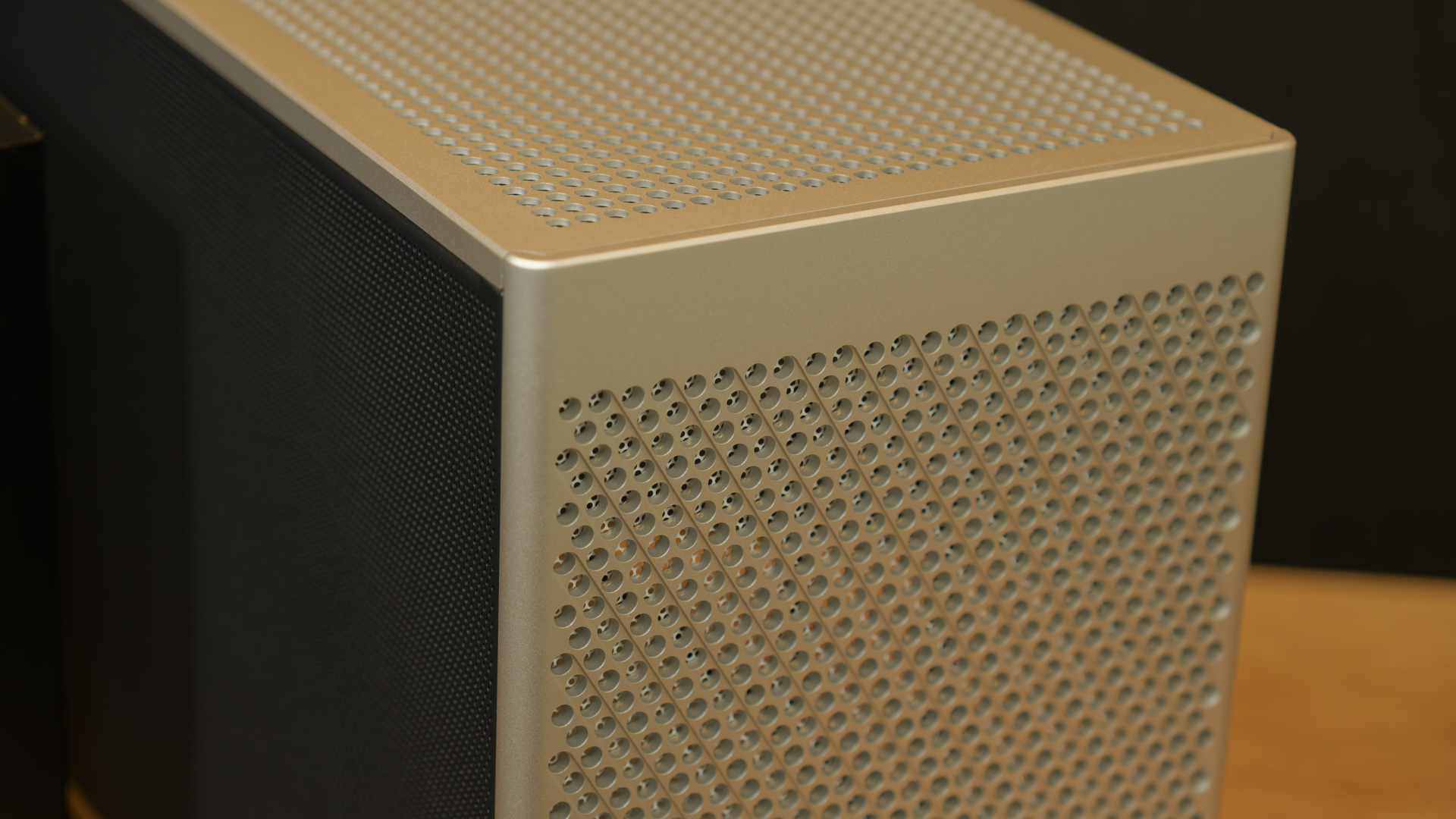
With the Ncase M3 at the workshop, I started figuring out exactly how to go about tackling this challenge. With a build like this, it’s pertinent to have the case on-hand when selecting the rest of the components, because the tolerances between a part fitting, and not fitting – there were situations in which I had mere millimeters to work with, which could make-or-break the entire build.
Parts selectionFor components, we decided to almost go all-out on this build. Since the goal was to push Mini-ITX to its limits, it only made sense to go with an Nvidia RTX 5090 and an AMD Ryzen 9 9950X3D.
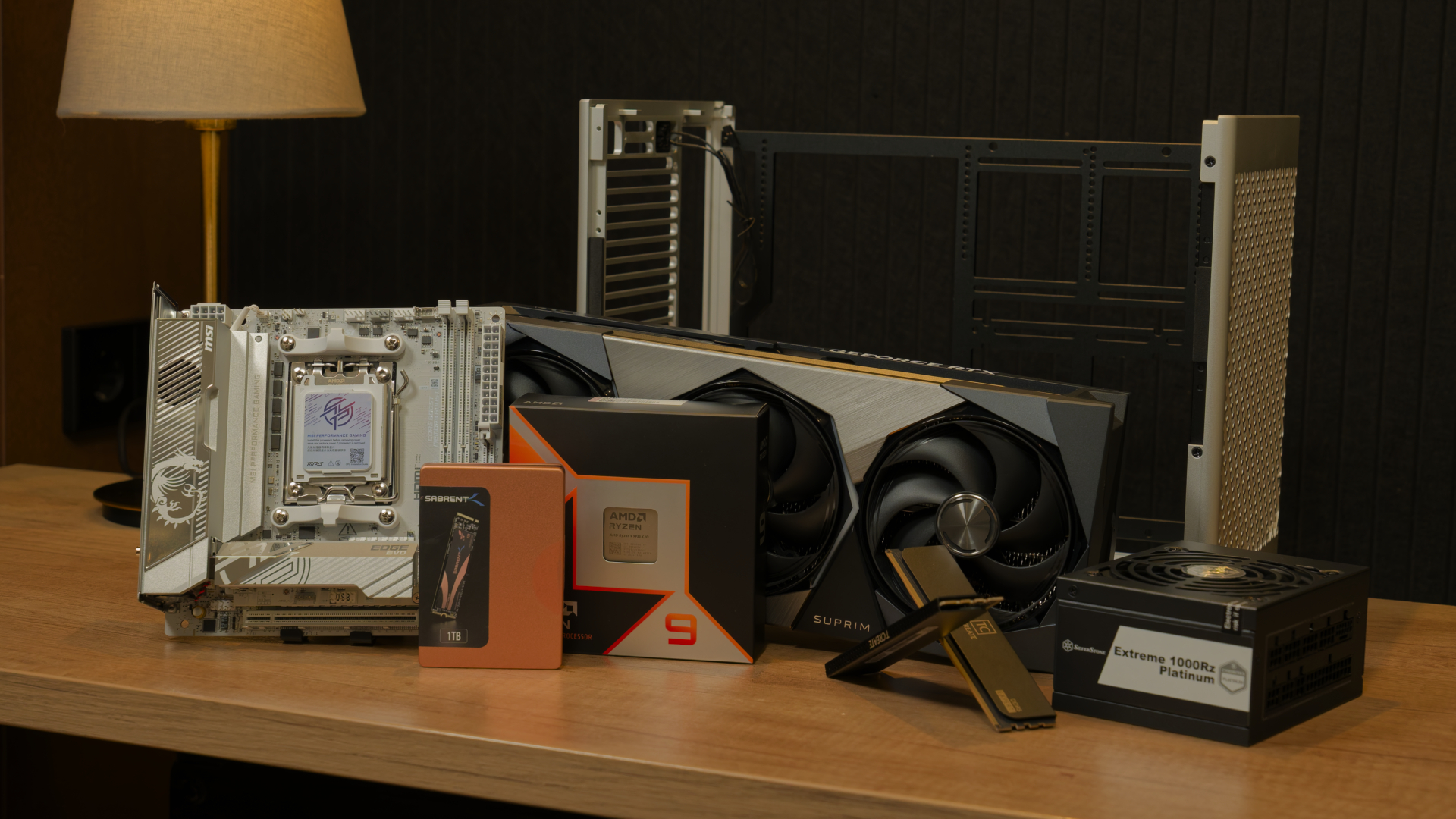
MSI was kind enough to provide the MPG X870I EDGE Ti Evo motherboard and an RTX 5090 Suprim. We’d like to thank them for coming on board this build, as we’d been transparent with them from the beginning about the extravagant plans of custom cooling within the minute size constraints.
What to read nextPowering this system was going to be a challenge. Thankfully, there are now a small handful of SFX power supplies available with a 1000-watt envelope, and I decided to go with a bit of an underdog: the Silverstone Extreme 1000Rz Platinum.
For storage, we’re using a Sabrent Rocket 4 Plus in the 1 TB flavor. Now, I’m aware that this is only a PCIe 4.SSD, and just 1 TB, a bit paltry in comparison to the rest of this system. However, the one PCIe 5.0 SSD I have on-site is currently installed in another PC. Besides, it’s not as if the Rocket 4 is a slouch in the slightest, and 1 TB is plenty for testing purposes here.
For memory, Greyscale uses a 48 GB (2x 24GB) DDR5-7200 memory kit from Team Group. I’ll detail the selection for cooling this system later when we get to building the actual cooling loop, but for now, let's build the system up ‘dry’ to make sure everything works before figuratively dunking it under water.
But first, let’s talk about NCase for a momentNCase is quite a special brand in that it’s not a large-scale commercial organization. Rather, the founders, once known as Necere and Wahaha360 on the [H]ardForum, were dissatisfied with the offerings available, and set out on a mission to build a better ITX case than they could buy on the market.
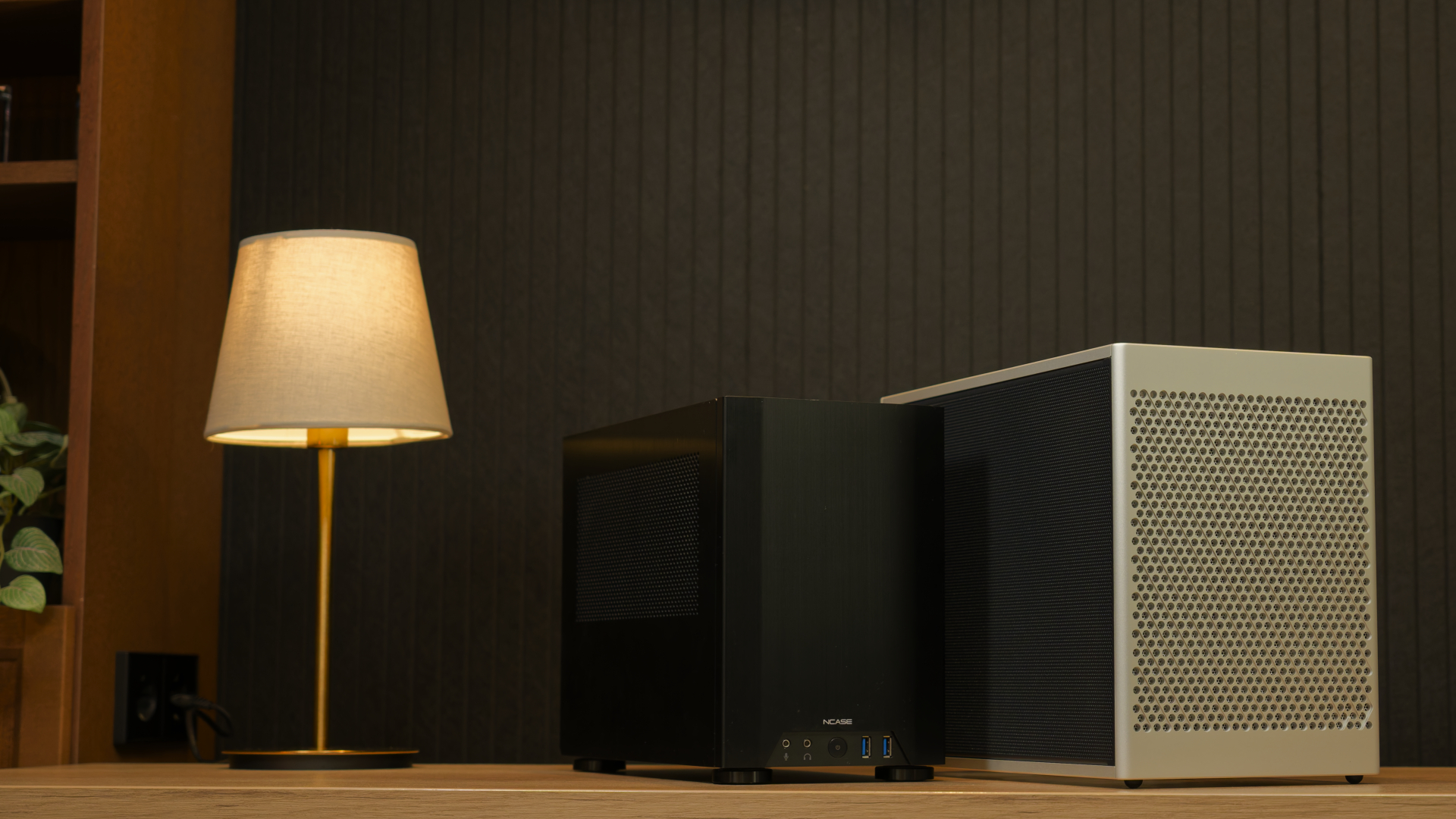
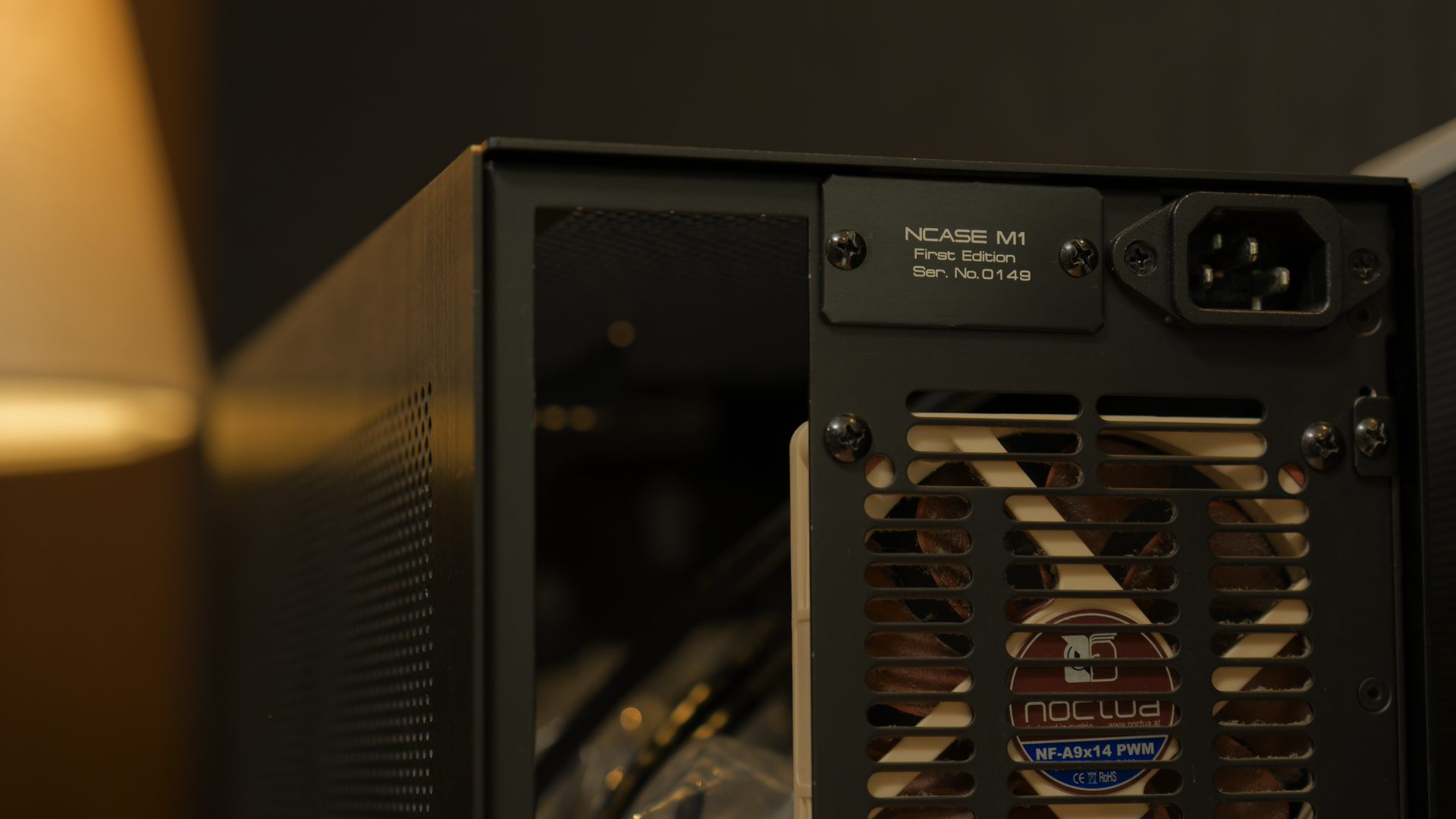
After many design iterations, Dan and AJ finally came out with the ‘first edition’ NCase M1 back in 2012, and I can say that I’m the proud owner of number 0149.
Production was outsourced to Lian Li, largely because Lian Li excelled in the manufacturing of high-quality aluminum PC cases, but also because Lian Li was actually willing to work with the just-founded NCase. Such a partnership is always a gamble, and building the tooling for a small production-volume case, especially when it isn’t your own product, isn’t particularly profitable.
However, the partnership worked out, and now, almost 14 years later, NCase has become a thriving small business complete with support, marketing, and PR staff, and crucially, they’ve sold a lot of cases.

No comments