
 eSIM Studios
Why you can trust Tom's Hardware Our expert reviewers spend hours testing and comparing products and services so you can choose the best for you. Find out more about how we test.
If you’ve followed Arctic over the past few years, you probably think of oversized radiators, VRM fans, and thermal domination. The company's Liquid Freezer III Pro 360mm AIO is a favorite of ours, providing top-tier performance while retaining a relatively affordable price tag.
But not every system needs a thick 360mm radiator, and many smaller cases can’t fit radiators at all. And let’s be honest: While having the strongest performance is great if you’re pushing CPU limits with overclocking, more basic cooling options are sufficient for most consumers.
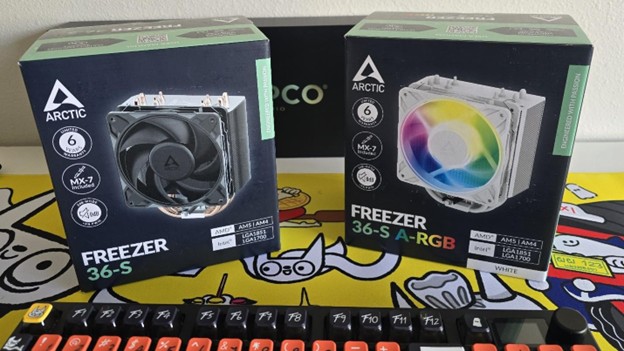
That’s where Arctic’s latest cooler, the Freezer 36-S, comes in. This is an entry-level air cooler available for less than $30, featuring only a single fan and tower connected by four direct-touch heatpipes.
Let's take a look at the specifications and features of the cooler, then we’ll go over thermal and noise benchmarks so you can decide if the Freezer 36-S will make our list of the best CPU coolers.
Cooler specificationsSwipe to scroll horizontallyCooler
Arctic Freezer 36-S
Colors
Silver/Black, White
MSRP
$28.49 for base model, up to $34.99 for white model with ARGB
Lighting
Non-ARGB and ARGB versions are available
Warranty
6 years
Socket Compatibility
AMD AM5, LGA 1700/1851
Heatsink dimensions
128 (L) x 88 (W) x 120mm (H)
Maximum TDP (Our Testing)
>245W with AMD’s Ryzen 9 9950X3D
T oday's best Arctic Freezer 36-S deals
Features of the Arctic Freezer 36S
● Four direct-touch heatpipes
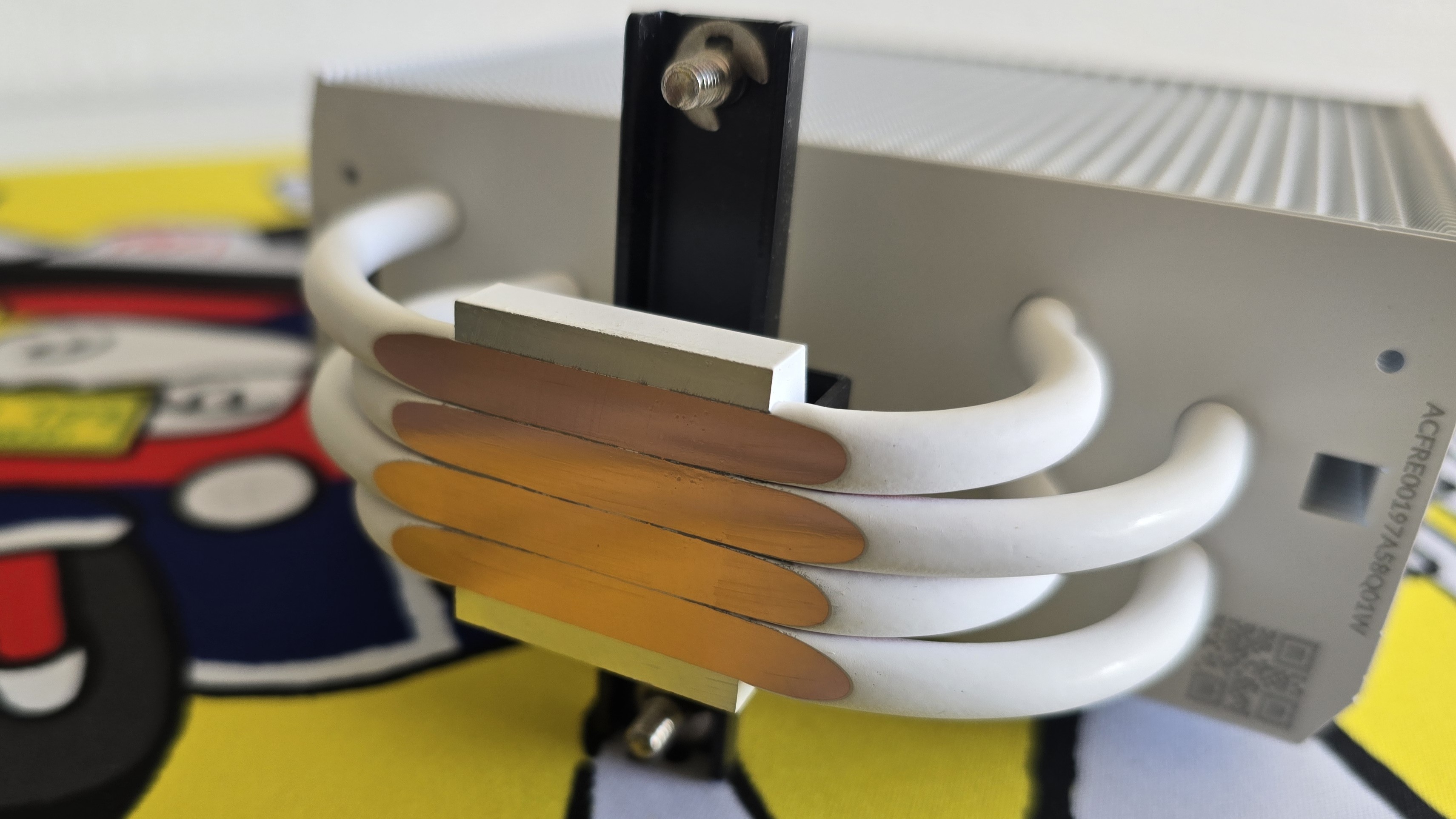
Four direct-touch copper heatpipes, slightly staggered to ensure even heat distribution and transfer heat from the CPU into the tower’s fins.
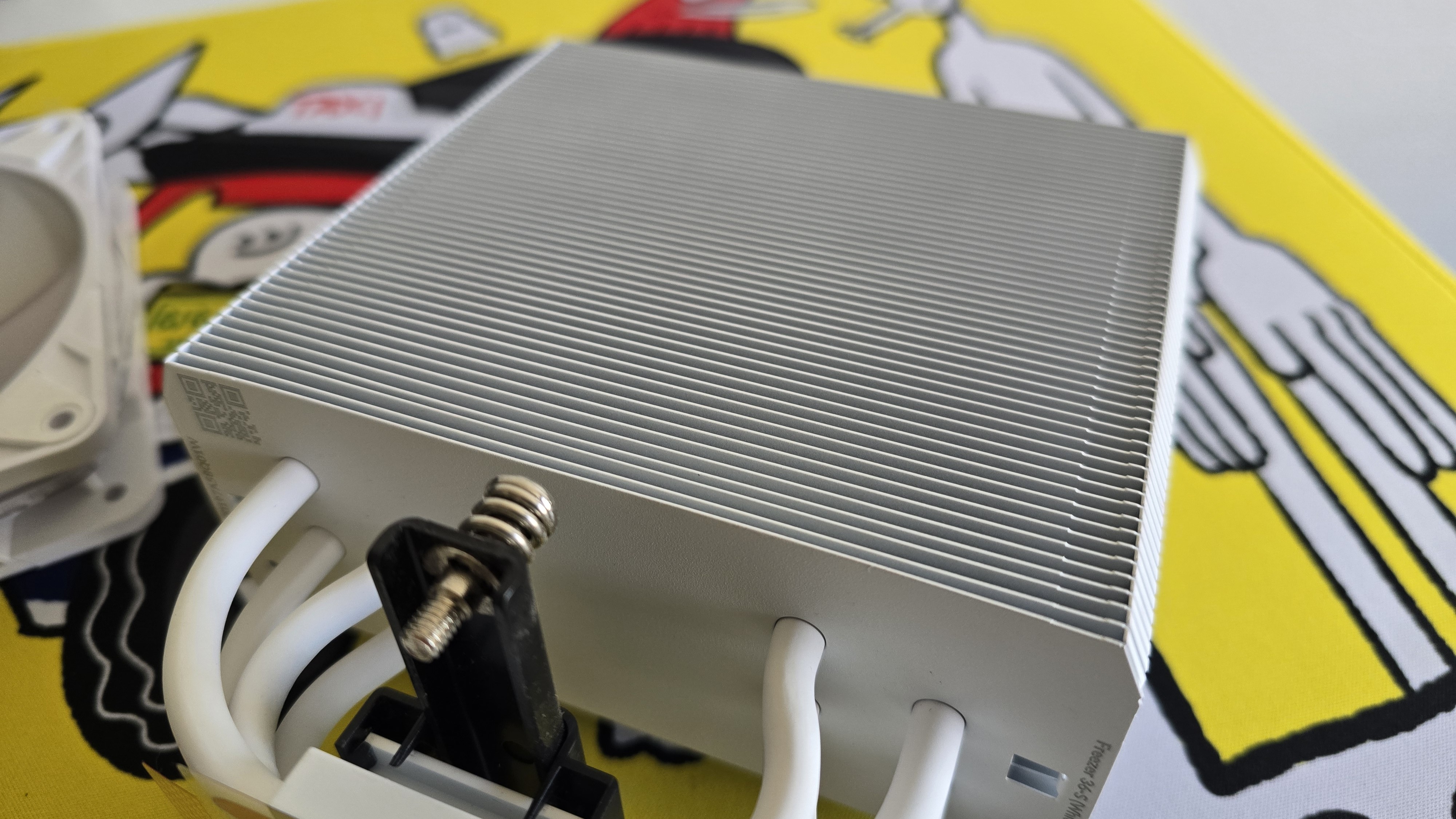
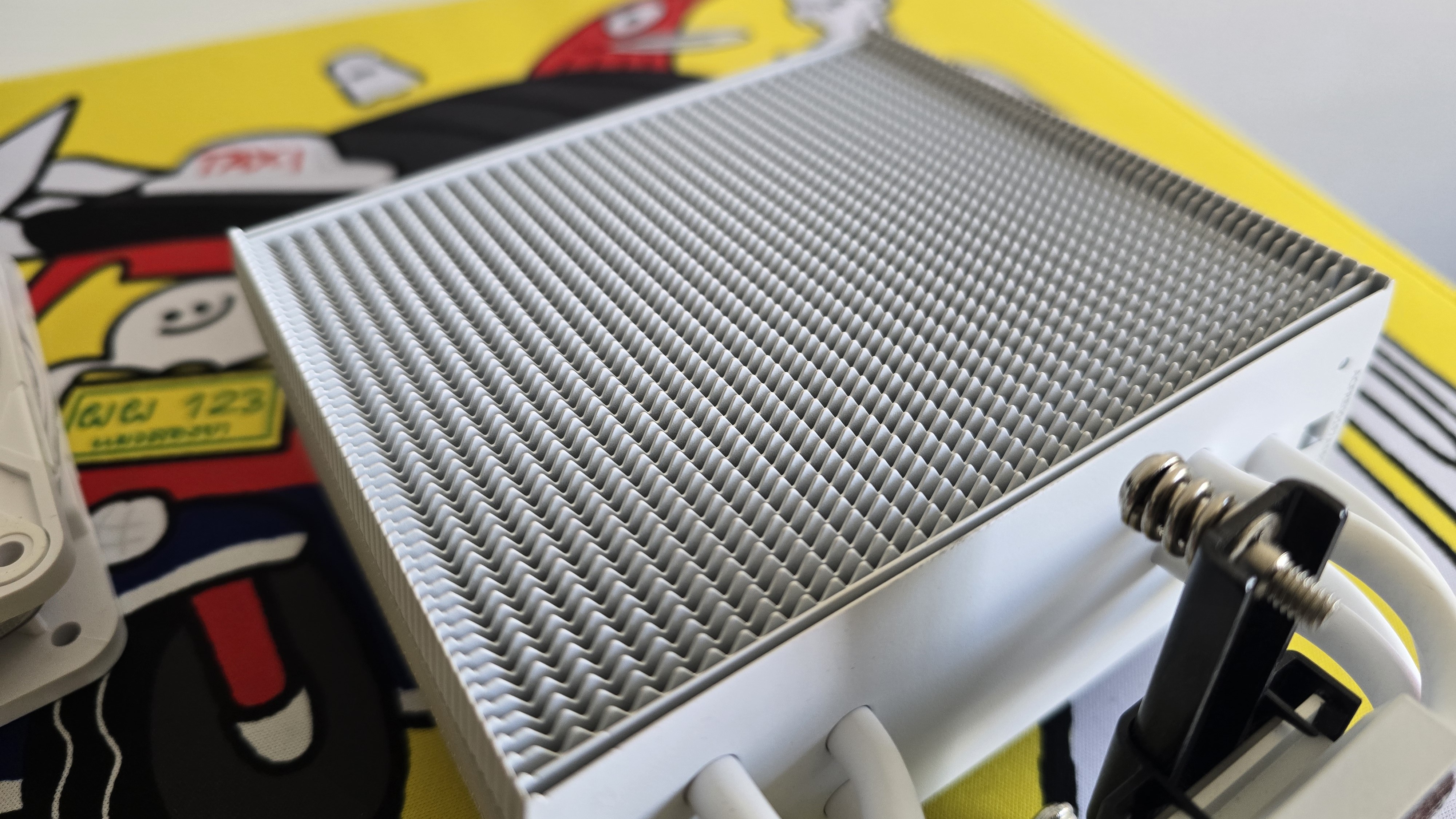
The backside (shown above) is mostly flat, whereas the fan-touching frontside has a “chainsaw” design to it.
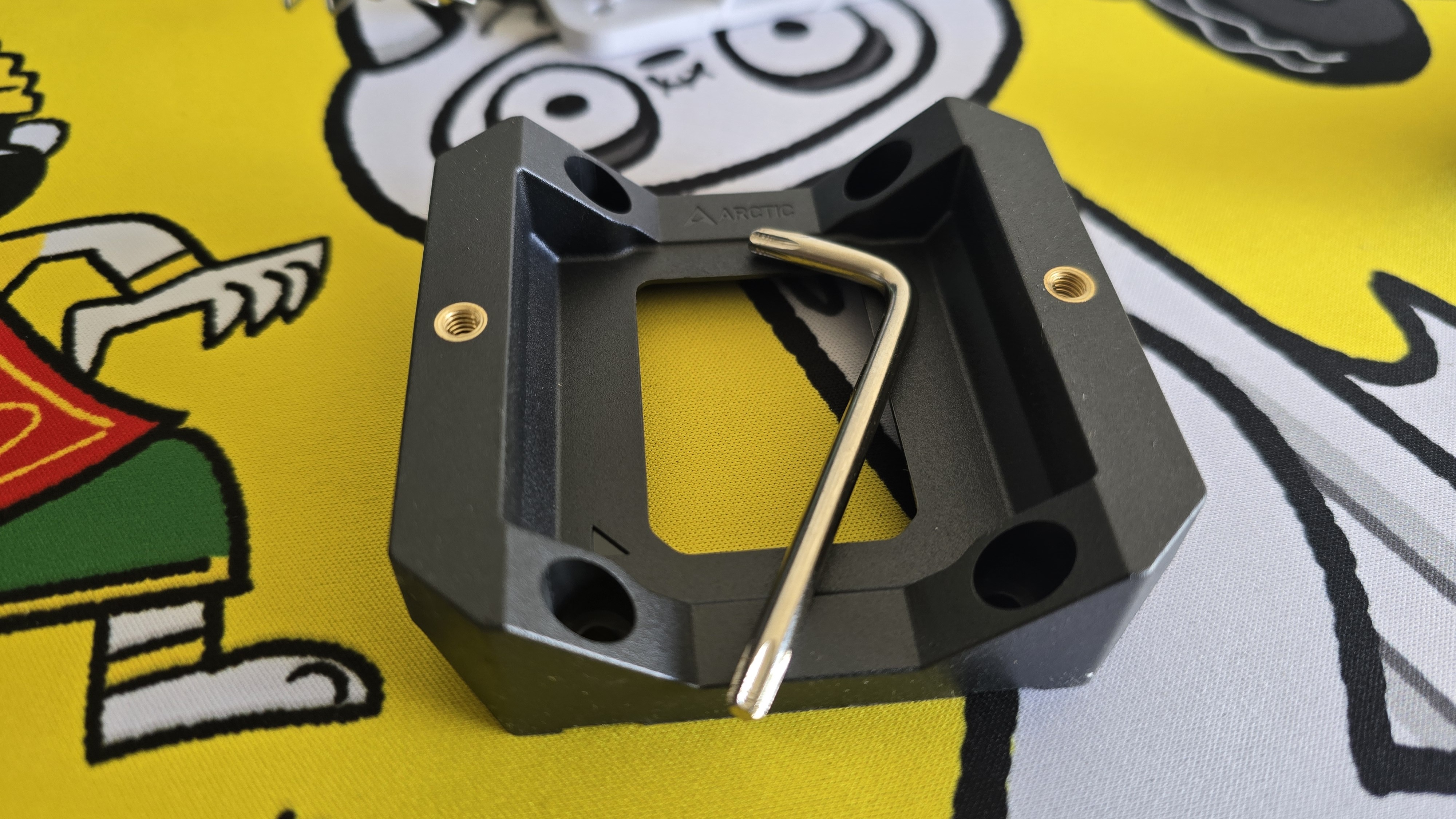
● Anti-bending CPU contact frame for Intel systems
Arctic includes an anti-bending CPU contact frame for Intel systems, which can help ensure consistent thermal performance – it’s especially useful for those who run high-intensity workloads, which subject the chip to more frequent thermal cycles.
However, using one of these frames is not without risk during the installation process. Improper installation can lead to RAM instability and other problems. It's not the best option for novice builders.
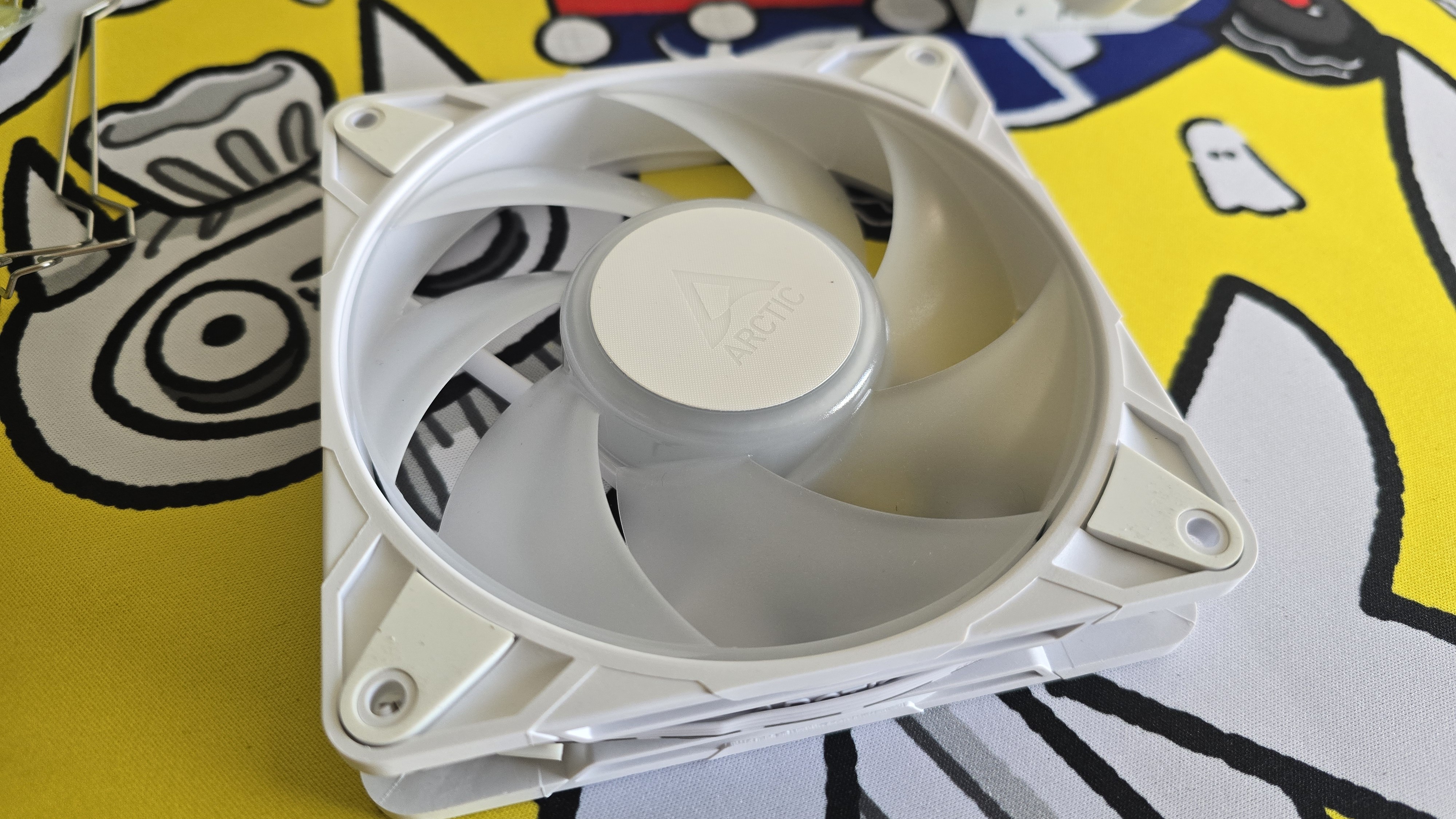
● High-speed 3000 RPM P12 Pro fan
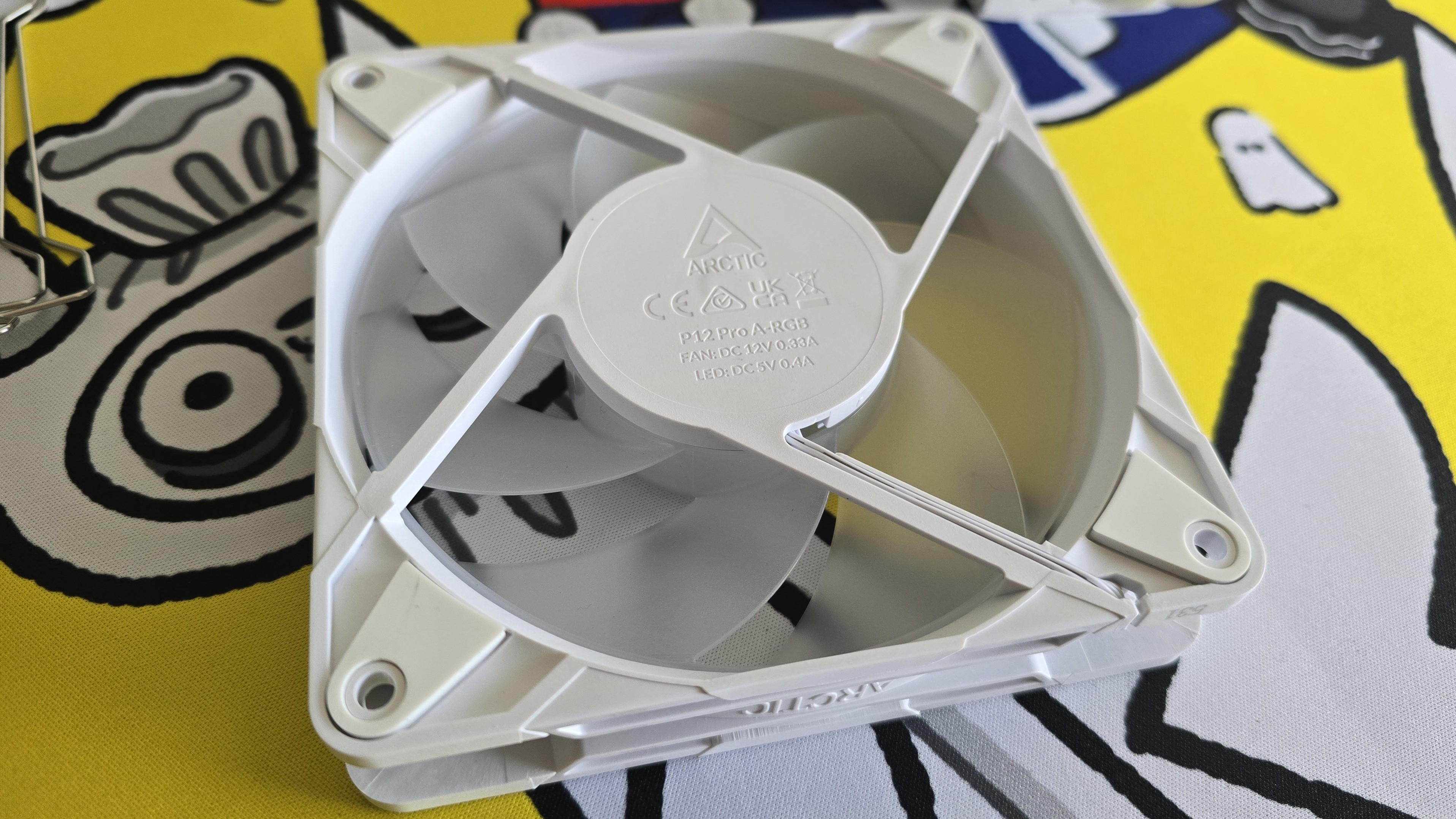
There’s more to a cooler than just the heatsink; the included fans have a direct impact on noise levels and cooling performance. Arctic includes its high-performance P12 Pro fan here, which reaches up to 3000RPM and features 77 CFM (cubic feet per minute) airflow rating, with an impressive maximum static pressure of 6.9 mmH2O – on paper, that's two to three times stronger than most fans on the market.
● Premium MX-7 thermal paste
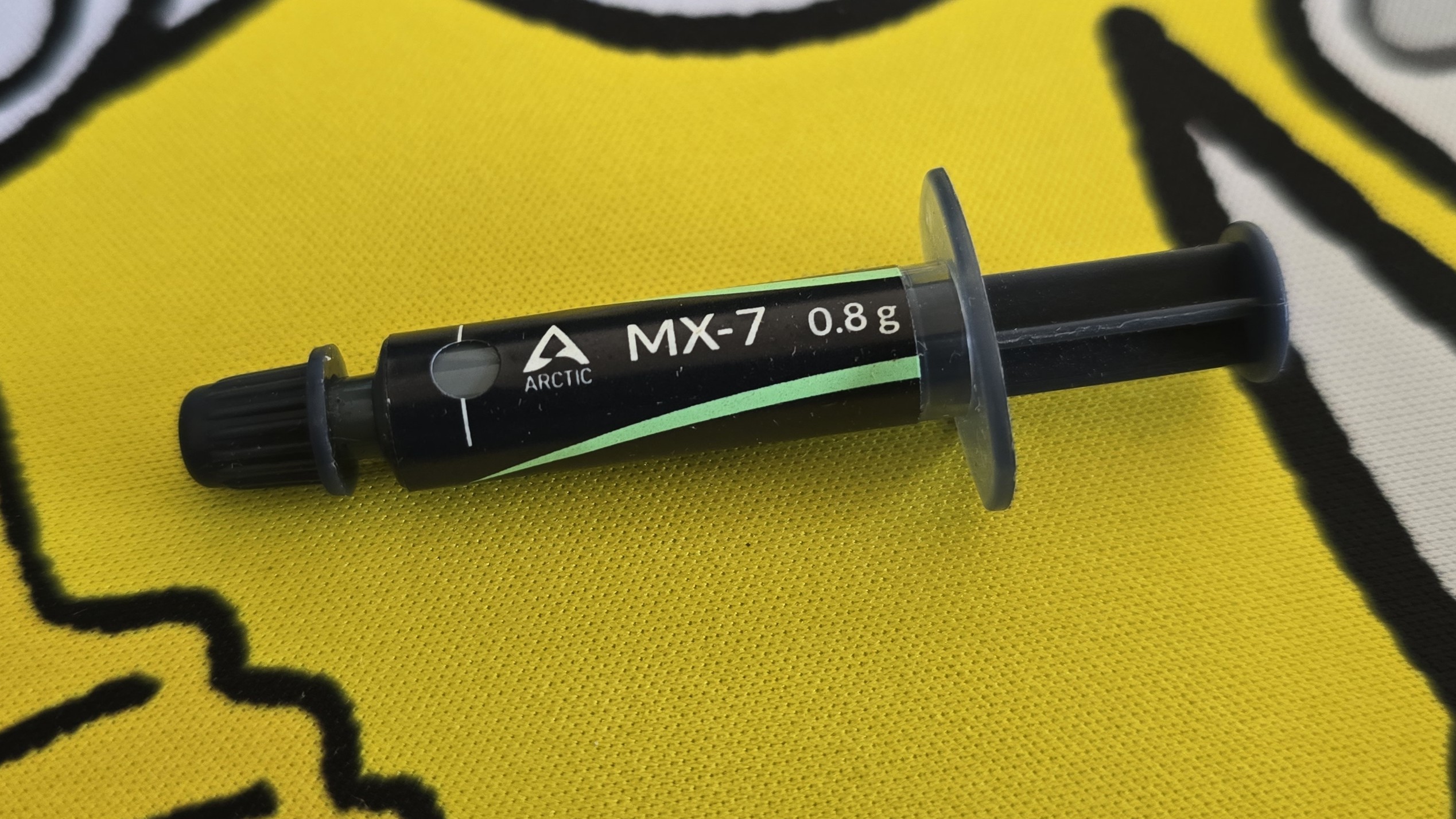
Arctic includes a small 0.8-gram tube of MX-7, its newest thermal paste. We haven’t tested this paste independently (yet), but Arctic’s MX-6 already performs very well in our thermal paste testing, with performance similar to the most effective competitors on the market.
● Packaging
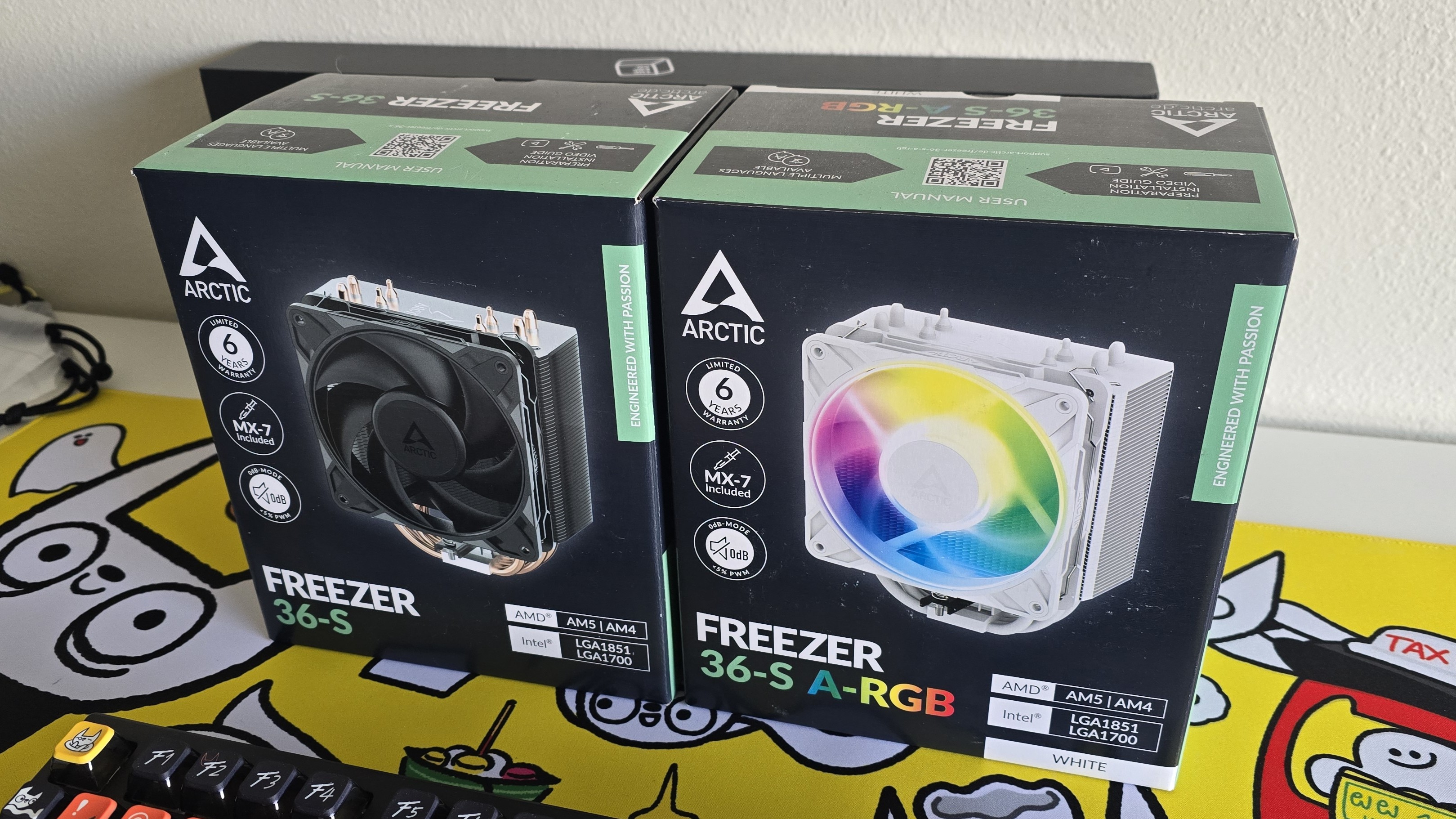
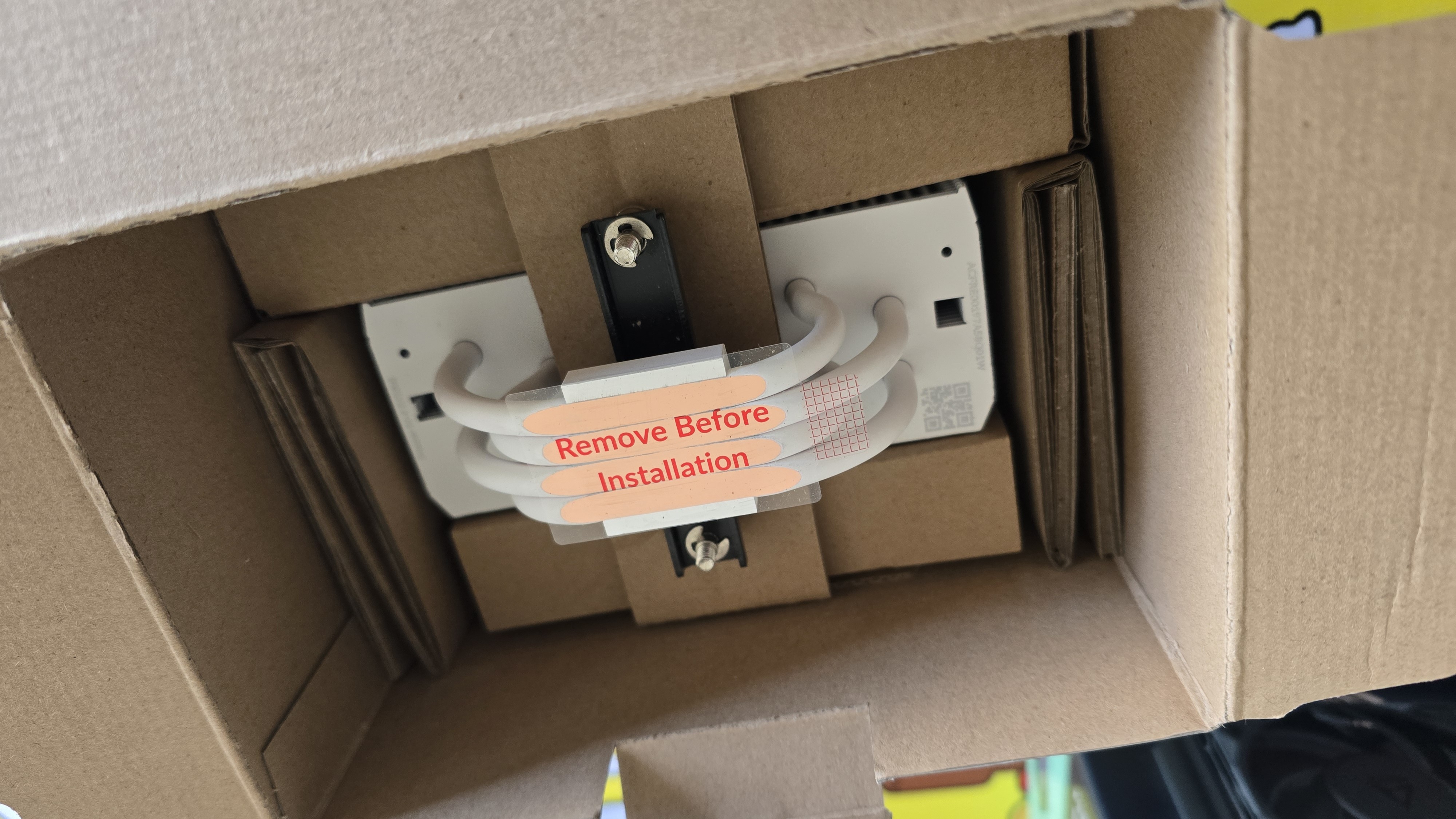
The heatsink and fan are in a cardboard-only package, reducing waste by forgoing plastic bags.
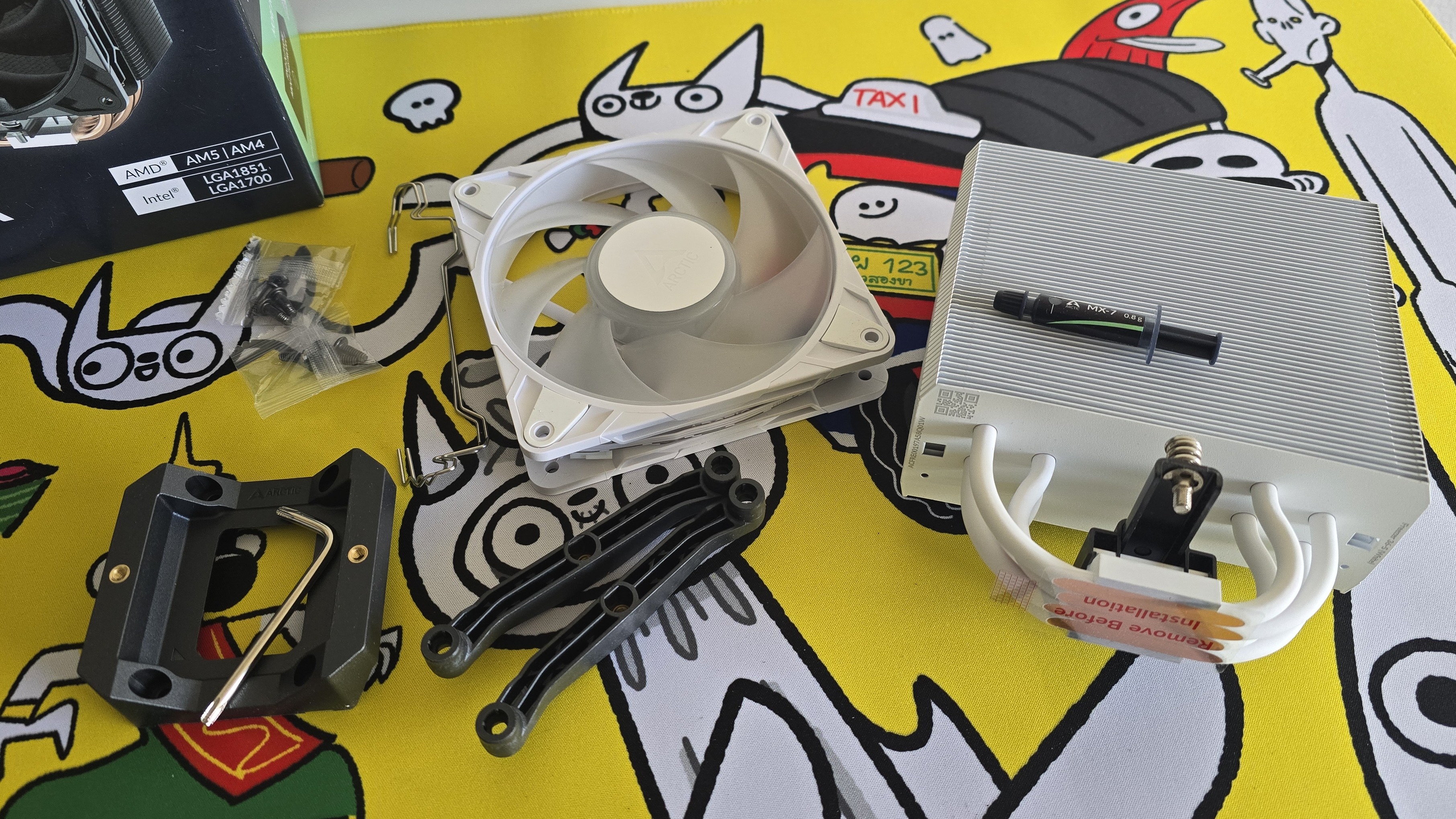
Included below is a picture showing all of the parts included: mounting bars for AMD systems, a contact frame for Intel systems, screws, the heatsink tower, and a 120mm fan.
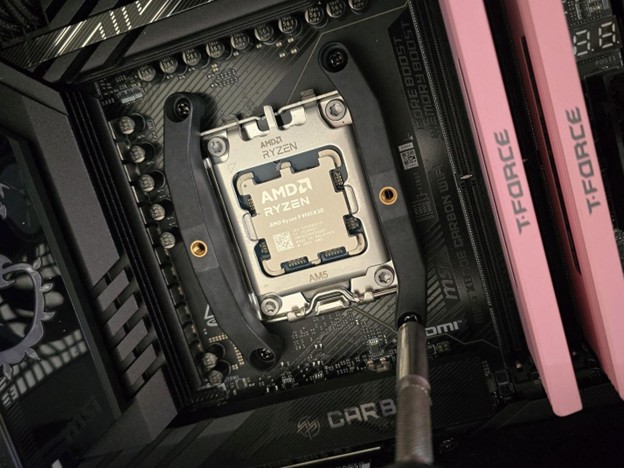
● AM5 Installation
Intel systems require the use of a contact frame, but if you’re installing on an AMD Ryzen system, the process is much simpler. You’ll need to first remove the default retention mechanism, and then replace it with the included mounting bars.
The next step is applying the MX-7 thermal paste. If you’re not sure how to do that, we have a thermal paste application guide that covers the different methods you can use.
Place the heatsink tower against the CPU and mounting bars, then use a screwdriver to secure it.
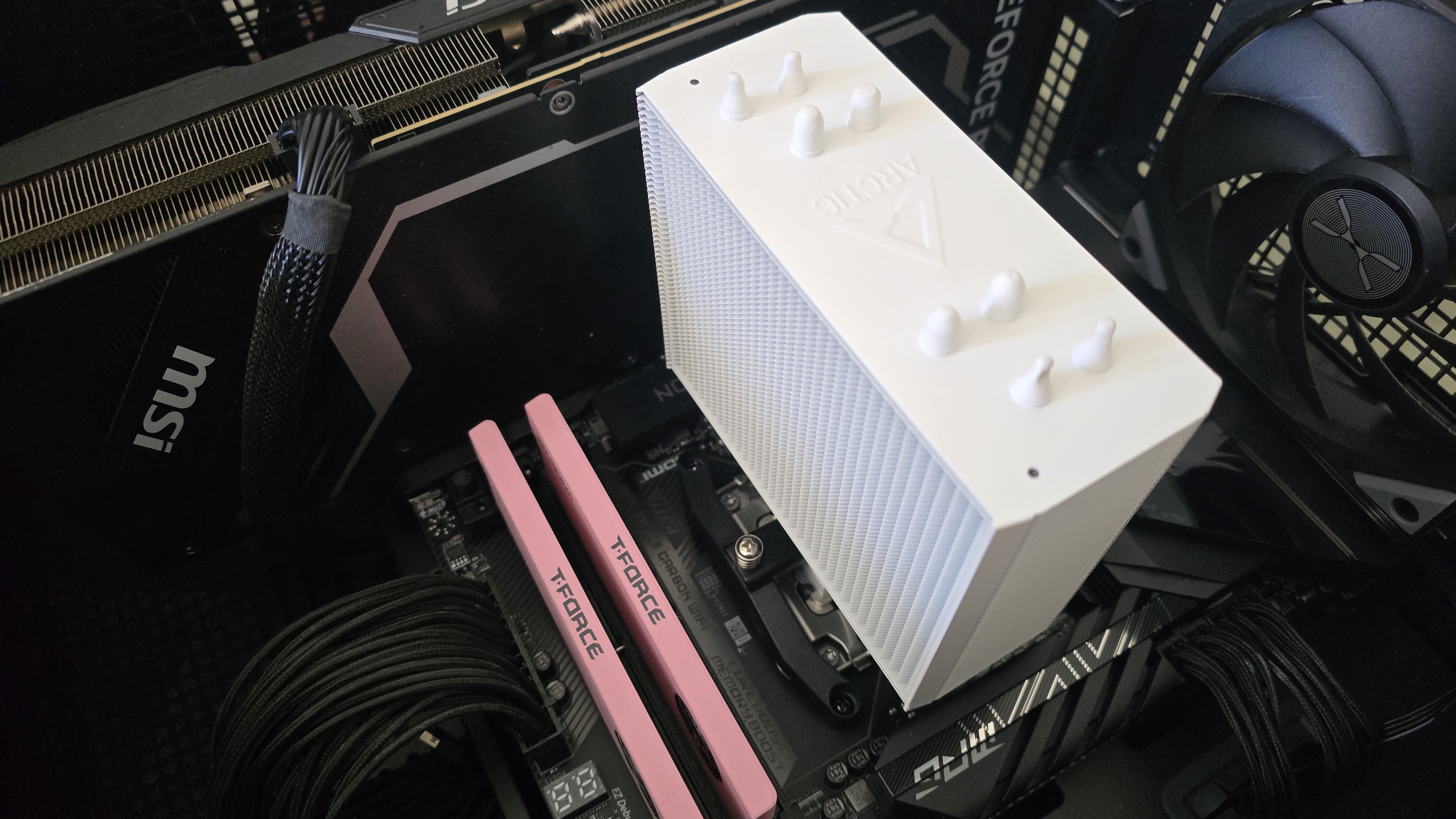
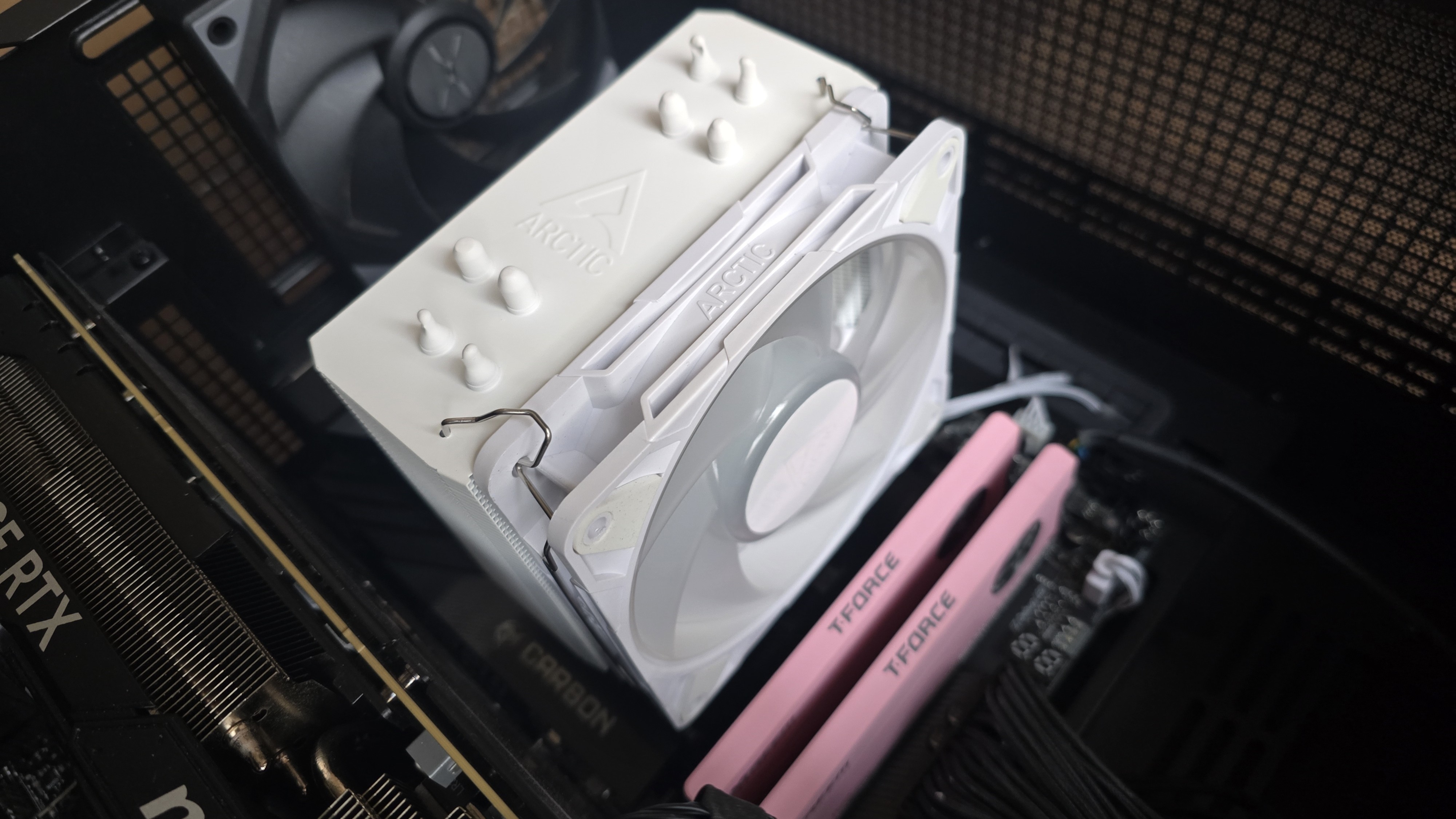
Lastly, attach the 120mm P12 Pro using the fan clips and connect it to your motherboard headers to complete the installation process.
We’ve tested coolers with both the Ryzen 9950X3D and its non-V-Cache sibling, the 9950X. There are some differences in how the 9950X and 9950X3D CPUs are impacted by thermal events. While the heat output of the CCDs of AMD’s 9950X3D are relatively balanced, the 9950X I’m using has one CCD that runs much hotter than the other, with a difference of over 10 degrees Celsius in some scenarios, shown below.
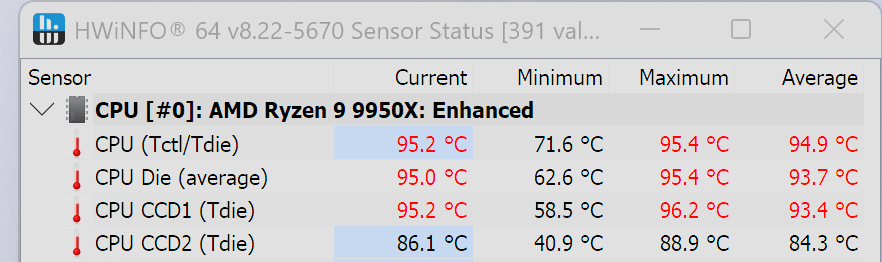
We’ve returned to using a 9950X3D for cooler testing, as it has a more balanced heat profile and is almost certainly a more widely adopted CPU.
The benchmark results shared in these reviews may differ from others because I place an emphasis on having results that are comparable to real-world use.
This means that I generally test CPU coolers inside of a closed desktop case, which increases cooling difficulty compared to other testing methods. Some people test coolers on an open test bench, with lowered ambient temperatures. This can make weak coolers appear stronger than they really are. Some publications have also used generic thermal plates to test cooling solutions. I reject both of these methods because they don’t accurately reflect real-world cooler conditions.
Swipe to scroll horizontallyCPU
AMD Ryzen 9 9950X3D
GPU
MSI Ventus 3X RTX 4070Ti Super
RAM
TeamGroup Diamond Rose T-Force Xtreem DDR5-7200
Motherboard
MSI X870E Carbon Wifi
Case
Tryx FLOVA F50
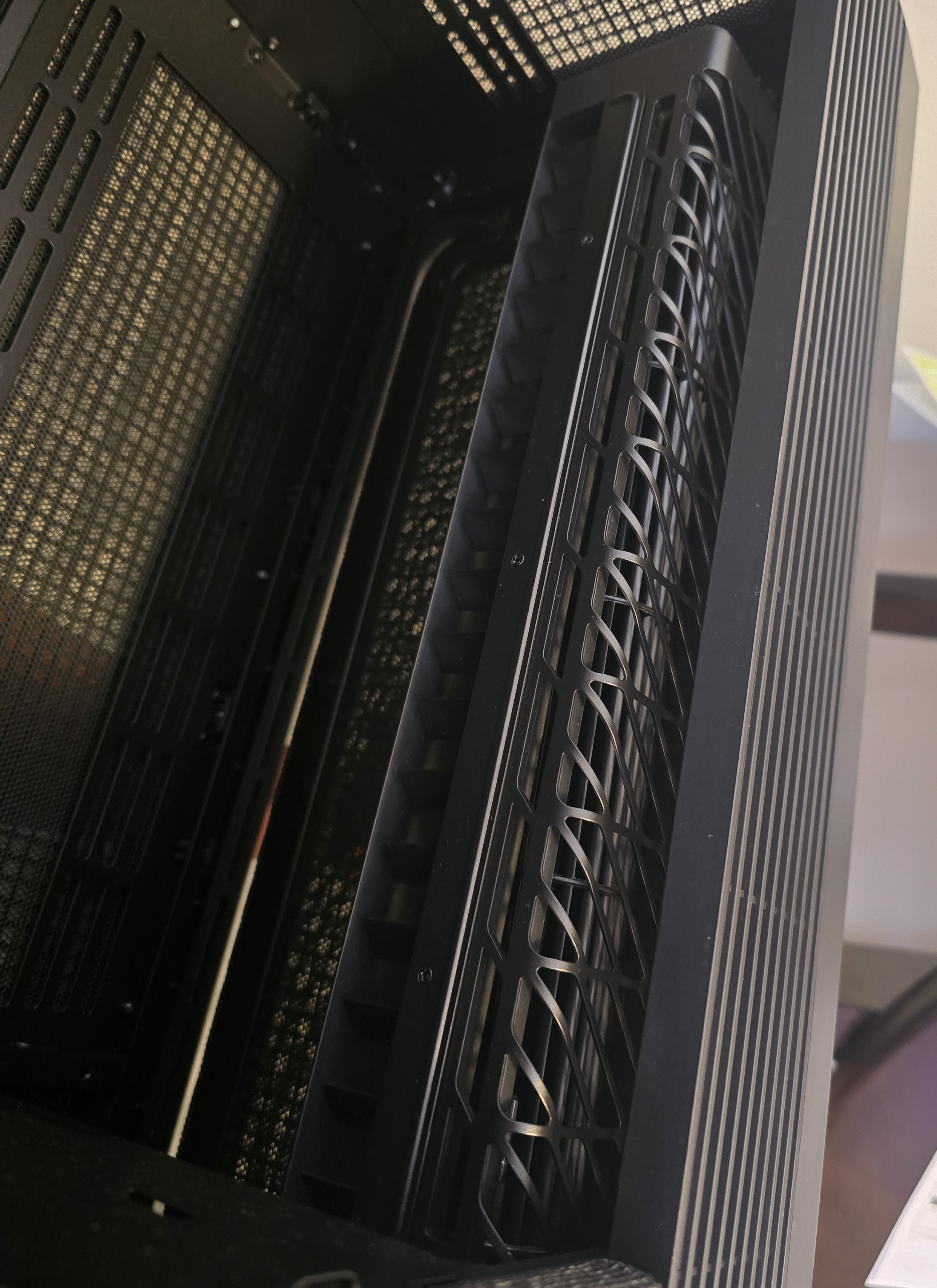
Our latest testing setup uses the FLOVA F50 computer case from Tryx.
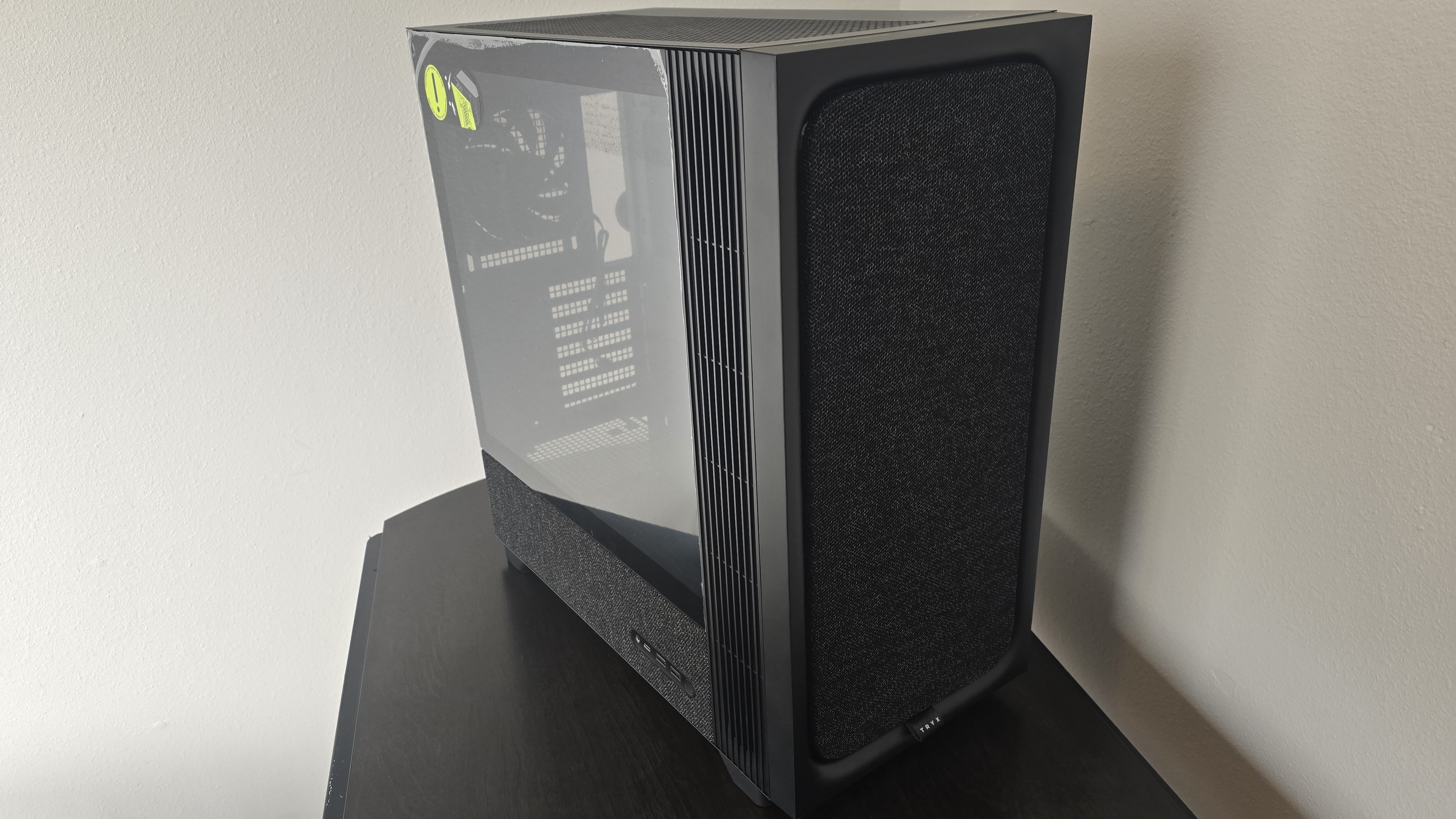
This case features a unique “crossflow” fan that pulls air from the side, which the company claims is more effective than traditional intake fans. For air cooling tests, we’ve added a single Noctua NF-A12 G2 intake fan.
Arctic Freezer 36-S: Price Comparison

No comments